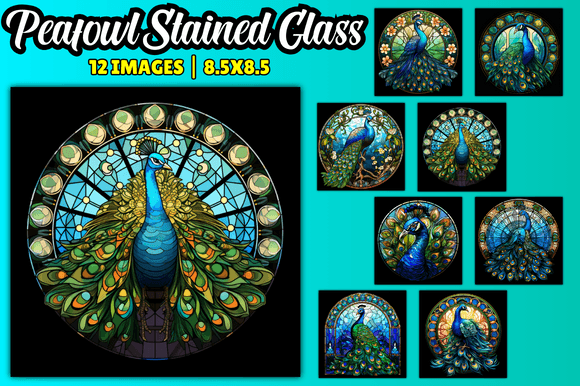
Peafowl Stained Glass: A Vibrant Graphic Design Asset for Creative Backgrounds
As a professional graphic designer with years of experience in branding, print-on-demand projects, and digital content creation, I often come across design assets that either elevate a project or fall flat under scrutiny. When I first opened the Peafowl Stained Glass design bundle, it immediately caught my eye—not just for its visual appeal, but for how it could potentially serve multiple purposes in real client work.
Aesthetic First Impressions and Visual Mood
The Peafowl Stained Glass set exudes a rich, ornate charm that's reminiscent of vintage aesthetics but with a modern twist. Each image is rendered in high detail, featuring intricate patterns and bold color palettes that evoke a sense of luxury and whimsy. The peacock motif, traditionally symbolic of elegance and beauty, is given new life through the stained glass interpretation—each feather becomes a kaleidoscope of hues that are both vibrant and harmonious.
This kind of visual mood works exceptionally well for handmade businesses, boutique product lines, or seasonal campaigns where the goal is to create an emotional connection with the audience. It’s not the sort of background you’d use for a sleek corporate website, but it shines in creative marketplaces like Etsy, social media posts for lifestyle brands, and editorial designs with a story to tell.
Real-World Applications Across Projects
Let’s break down how this asset might perform in various design scenarios:
- Logo Design: While not ideal as a primary logo element due to its complexity, the Peafowl Stained Glass can be used as a supporting brand element—like a border or watermark in stationery or packaging.
- Brand Identity: This design would fit well within a brand identity system that leans into artisanal, bohemian, or nature-inspired themes. Its colorful and detailed nature can help build a unique visual language.
- Product Labels & Packaging Design: The design adds a decorative flair that suits handcrafted products such as candles, soaps, or jewelry boxes. However, it should be applied carefully to avoid overwhelming the text or key information.
- Invitations and Greeting Cards: Perfect for wedding invitations, holiday cards, or event flyers. The pattern brings a sense of celebration and grandeur without being too garish.
- Printable Designs: With its inclusion of PNG and PDF formats, it’s ready to go for planners, calendars, and printable art. The 8.5” x 8.5” size is especially useful for standard paper layouts.
- Social Media Graphics: Ideal for Pinterest pins, Instagram stories, or Canva templates aimed at lifestyle, wellness, or craft audiences. Just ensure the colors don’t clash with your brand palette or text overlay.
- Cricut Projects: If you're into die-cutting, these images can add a pop of personality to stickers, scrapbooking elements, or custom greeting cards.
Where It Shines
The Peafowl Stained Glass graphics truly excel in large layout areas. Think hero sections on websites, full-page posters, or even as a base for a themed collection of merchandise. Its high-resolution format ensures clarity when scaled up, making it suitable for commercial applications such as sublimation design on mugs, tote bags, or apparel. For t-shirt design or sticker design, it can serve as a standout visual if layered correctly with minimal text.
It also performs well as a decorative accent in packaging details or as part of a campaign visual that needs to feel more polished and artistic. In editorial design, it can act as a background for feature spreads or chapter headers in a beautifully curated magazine or blog layout.
Where Caution Is Needed
Despite its strengths, there are situations where the Peafowl Stained Glass might not be the best choice. Avoid using it in small sizes or crowded layouts, where the intricate details can become lost or distracting. Similarly, it may not suit minimalist branding or professional corporate materials where clean visual hierarchy is essential.
If you’re working on something that requires low-contrast designs or subtle textures, this asset’s vividness might overpower the message. Always consider the balance between the background and the foreground elements—especially when dealing with text-based marketing visuals or web design components where readability is paramount.
Design Practicality and Commercial Use
Before integrating any design asset into a client project, it’s crucial to test it thoroughly. Here’s what I look for when evaluating the Peafowl Stained Glass:
- Contrast Testing: Preview the design on both light and dark backgrounds to see how it holds up. This helps determine whether it will support legibility or disrupt it.
- Transparency Check: Since it includes PNG files, inspect the transparency to ensure it blends well with other design layers. This is particularly important for digital ads or layered Canva templates.
- Mockup Placement: Try placing the graphic on real product mockups—like a mug or tote bag—to assess how it looks in context. Sometimes, what looks great in isolation doesn’t translate well to physical items.
- Print Quality Test: If you plan to use it for printables, run a quick test print to confirm color vibrancy and sharpness. High-quality output is essential for maintaining professionalism in printed goods.
- Font Pairing: Compare the graphic with different font styles—serif, sans serif, script, handwritten, display—to find the right balance. You’ll likely want to pair it with a simple, elegant typeface to let the illustration shine.
- Licensing Confirmation: Always verify the commercial license before using it for a client or business project. This asset is clearly intended for professional use, but double-checking is a must.
Impact on Brand Consistency and Audience Engagement
Using the Peafowl Stained Glass consistently across a client’s brand touchpoints can significantly enhance visual trust and recognition. Its stylized yet timeless aesthetic gives off a sense of quality and attention to detail—key factors in building brand credibility. That said, it should only be used by brands whose style aligns with the ornate and colorful vibe it presents.
In terms of emotional appeal, the design has a strong nostalgic and luxurious undertone. It can help position a brand as upscale or artisanal, depending on how it’s styled. For content creators and bloggers, it can inject personality into blog visuals or editorial spreads, especially those focused on home décor, fashion, or cultural themes.
Designer Notes: How to Get the Most Out of This Asset
Here are some practical tips for getting the most out of Peafowl Stained Glass in your workflow:
- Test it in black and white: See if the design still holds its form and impact when desaturated. This can help you understand its versatility beyond color.
- Use it in themed collections: Group it with similar-style graphics to maintain a cohesive look across a range of products or marketing materials.
- Layer with caution: Because of its complexity, layer it sparingly. Consider using it as a background rather than a foreground element to preserve visual hierarchy.
- Adapt to your brand palette: Don’t hesitate to recolor the design slightly to match your brand’s existing color scheme. This ensures better integration and brand consistency.
- Confirm file compatibility: Make sure all formats (PNG, PDF) are compatible with your tools. Whether you're using Adobe Illustrator or a Cricut machine, knowing the technical specs ahead of time is vital.
Why This Design Asset Matters in Professional Work
What sets Peafowl Stained Glass apart from generic clipart or illustrations is its ability to bring a narrative into the design. It doesn't just fill space—it tells a story. As a graphic design asset, it’s versatile enough to work across printables and digital platforms while maintaining a consistent visual tone.
For digital sellers and print-on-demand entrepreneurs, this set is a valuable addition to your creative toolkit. It offers a fresh approach to product mockups, helping you stand out in a competitive marketplace. And for marketers looking to refresh a seasonal campaign or launch a new line of handmade products, the Peafowl Stained Glass provides a compelling visual anchor.
However, its success in a project depends heavily on thoughtful application. It’s not a one-size-fits-all solution, but when used correctly, it can elevate the overall impression of a design project—from small business branding to commercial design assets.
Final Thoughts on Peafowl Stained Glass for Real Client Projects
In summary, the Peafowl Stained Glass is a powerful graphic design asset that can enrich a wide array of creative projects. Its blend of detail and color makes it especially effective in backgrounds for greeting cards, gift wrapping, and planner inserts. It can also be repurposed in ways that go beyond the original scope—such as in SVG format for more scalable use in digital storefronts or as part of a larger design bundle for a cohesive theme.
But remember, no matter how beautiful a design is, it must serve the purpose of the project. As a designer, I always ask myself: Does this asset support the brand’s voice? Does it improve the final outcome? With Peafowl Stained Glass, the answer is often yes—but only when used intentionally and thoughtfully.
If you're looking for a design asset that adds depth and character to your creative work, this one is worth considering. Just make sure to review the commercial licensing and test it in context before committing to a client deliverable.